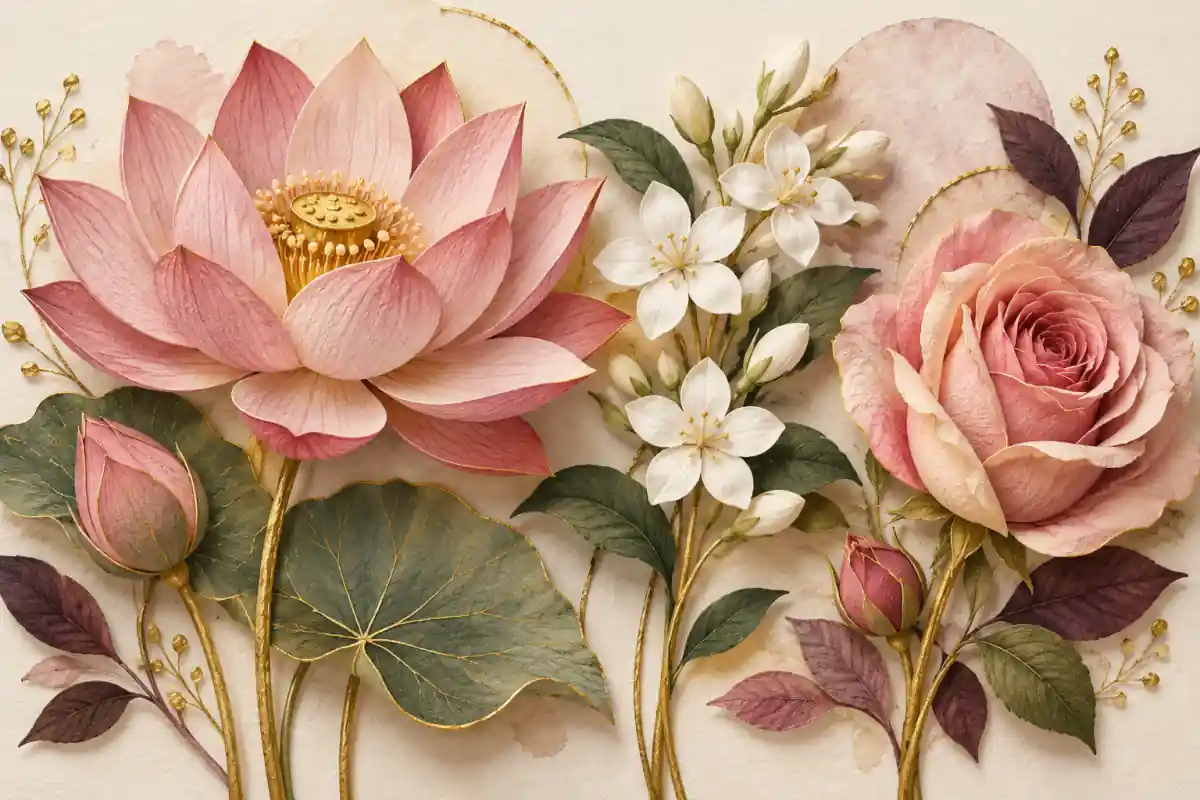

Nature-inspired Hindu baby names can draw on earth, seasons, plants, rivers or the sky. The most useful choice begins with a particular image rather than a large collection of attractive words. Check the language and literal meaning of each candidate, then explain the personal association that makes it relevant to your family. A name's natural origin does not automatically establish a religious epithet.
Begin with a place or moment you can picture
Think of the natural experiences that remain vivid in your memory: a garden at a grandparent's home, the arrival of a season, morning light through a window or time spent near water. These memories can provide a more personal starting point than asking for an unusual nature name in the abstract.
Describe the image without looking for a name immediately. Is the attraction to colour, movement, stillness or a sense of place? Does it connect with India, the country where you now live or both? The answer can guide the research towards a manageable set of concepts.
You do not need a dramatic landscape or an elaborate story. An ordinary tree seen from a childhood room can matter more than a famous mountain visited once. The name's significance comes partly from your relationship with the image. Research then helps find an appropriate word rather than manufacturing a personal connection after the spelling has already been selected.
Three examples connect with different parts of nature
Avani has dictionary support for earth among its senses. Vasant, related to Sanskrit vasanta, connects with spring. Jyoti, through the source word jyotis, connects with light. These are distinct natural themes: a place or substance, a season and an illuminating phenomenon.
The examples are deliberately familiar enough to encourage comparison rather than novelty for its own sake. A family might appreciate Avani for a grounding earth image, Vasant for a seasonal memory or Jyoti for the experience of light. Those personal responses should be identified as symbolism, not added to the literal meaning as though each were a separate dictionary definition.
The source forms also remind parents to look beyond English spelling. A Sanskrit headword and an everyday personal name may differ in their spoken ending or written representation. Preserve the relationship clearly, particularly when the family uses more than one Indian language.
Distinguish the thing itself from the quality it suggests
A flower can suggest beauty, a river can suggest continuity and the sky can suggest openness. Those are understandable associations, but they are not automatically literal translations of the corresponding names. The distinction helps parents appreciate symbolism without repeating inaccurate meanings.
Write two sentences for each candidate. The first states what the word denotes. The second describes what that image means to your family. If you find that the second sentence is doing all the work, that is useful information: perhaps the natural object itself does not appeal as much as the value you associate with it.
You can then decide whether to continue with a nature theme or investigate a name directly connected with that value. For example, a family seeking steadiness may prefer an earth image, or may ultimately want a word for stability. Neither choice is inherently better. A clear brief simply prevents you from expecting one category to supply another category's exact meaning.
Explore one natural family of ideas at a time
Nature is a broad category. If you compare a river name, a flower word, a season and a celestial term simultaneously, the shortlist can become difficult to evaluate. Begin with the part of nature that genuinely interests you, then widen the search only if necessary.
For plants, identify whether the word refers to a specific species, a general flower or a poetic compound. For water, distinguish a named river from a generic word. For the sky, separate a visible object from an astrological or devotional association. For seasons, check the language and cultural setting rather than assuming that every calendar follows the same divisions.
This approach creates useful questions without requiring you to become a botanist, geographer or astronomer. You are establishing enough context to explain a name responsibly. A specialist check may be worthwhile when a candidate depends on a precise claim, but many families can make an excellent choice with a modest, well-supported meaning.
Let heritage be specific without becoming exclusive
A name used by Hindu families may come from Sanskrit or from another Indian language. A natural word may also be used across religious communities. Neither fact diminishes its suitability, but the language of origin and the cultural association should be stated separately.
If regional heritage matters to you, include it in the brief. A family may prefer a word that is natural in the language spoken by grandparents, even when another Sanskrit-derived option has a similar English meaning. Local sound and familiarity can be part of the name's emotional value.
Avoid describing every Indian nature name as Sanskrit simply because it is used in a Hindu household. Equally, do not assume that a Sanskrit word belongs exclusively to one community. Accurate classification gives the child a clearer account of where the name comes from and how your family chose to use it.
For a multicultural household, a shared natural image can be a point of connection. Two languages may name the same landscape differently, and the family can decide which form best fits their own life.
Use a seasonal or geographical connection thoughtfully
A child need not be born in a particular season to receive a season-related name. Nor must a family live beside a river or mountain to value it. Natural naming can commemorate a memory, express affection or preserve a connection across distance.
What matters is whether the explanation is honest. If a name recalls spring in your grandparents' town, say that rather than inventing a rule about the child's birth month. If it honours a place you love, distinguish that personal tribute from the word's literal etymology.
For families living abroad, the same season can feel different in different climates. That does not make the association invalid. It may become part of the story: the name remembers one landscape while the child grows up in another.
Give yourself permission to choose for emotional resonance rather than perfect biographical matching. A nature name does not need to document the weather, time and location of birth like a certificate. It needs a clear source and a reason that feels meaningful to the family.
Test whether the name works away from its image
A beautiful illustration can make almost any nature-related word feel appealing. Before choosing, remove the image and say the name alone. Does the sound still attract you? Does it work comfortably with the surname? Can you imagine introducing an adult by it?
This exercise separates the name from the visual atmosphere around it. A name should not depend on a photograph of a lotus or a mountain to feel complete. The natural association can enrich it, but the spoken identity needs to stand on its own.
Write the candidate in the scripts your family uses and ask fluent readers to say it aloud. If you are considering a modified Roman spelling, check whether it helps or changes the intended pronunciation. Adding letters does not make a natural meaning more distinctive; it may only make the source harder to recognise.
Also consider the nicknames likely to arise. A short household form can be lovely, but if it becomes the official name, its meaning and language should be checked independently.
Questions about nature-inspired names
Are all nature names used by Hindu families Sanskrit?
No. Indian naming draws on many languages, and natural vocabulary can be shared across communities. Identify the actual source language and explain the family's cultural connection separately rather than treating religion as a language label.
Does a flower or river name predict personality?
No. Associations such as gentleness, resilience or adaptability can be family symbolism, but they do not establish a child's traits. State the literal meaning first and keep personal interpretation clearly separate.
Should we choose something extremely rare?
Rarity is not necessary for personal meaning. A familiar name connected with a specific family memory can be deeply individual. Claims about national rarity also require appropriate data, not merely the fact that a name is unfamiliar to you.
Build a name around a relationship with the natural world
Choose a few candidates from one theme and compare their source meanings, spoken forms and personal associations. Keep the explanation modest enough that you can tell it naturally. The strongest choice often emerges when language evidence and family memory support one another.
You might preserve a photograph of the place or season that inspired the name, alongside the source note. That creates a tangible connection the child can explore later without being required to share exactly the same response.
Naamkaran can help refine the language and narrow a broad nature brief into a small, suitable shortlist. The final name should feel comfortable in daily life and hold an image your family genuinely values. Nature supplies the inspiration; your child's life will give the name its own meaning over time.